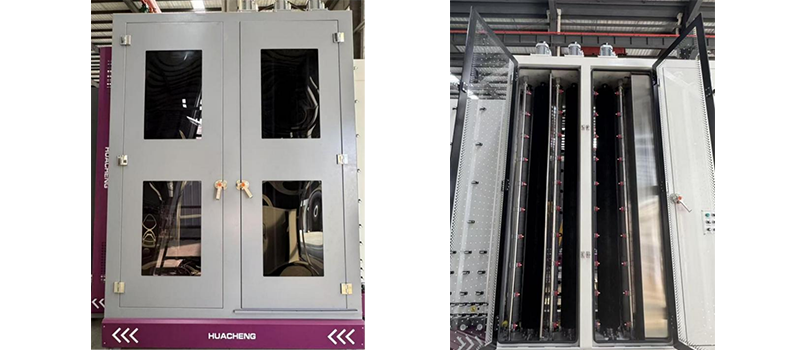

Zero-damage Processing for High-end Low-E Glass: Core Logic of Cleaning Section Technology Upgrade
Against the backdrop of continuously upgraded building energy efficiency standards, high-end offline Low-E glass including double-silver and triple-silver products has become a standard component for high-grade curtain walls and customized doors & windows. However, glass processing enterprises are constantly troubled by high rejection rates when handling premium Low-E orders. Even if cutting and edge grinding are precisely completed, film scratches, residual water stains, edge delamination and oxidation often occur right before cleaning and combining, leading to scrapped glass batches and eroding order profits.
Many manufacturers simply attribute the problem to the fragility of coating films, while ignoring a key fact: Over 90% of Low-E film damage happens during the cleaning process. The key to zero damage is never about stronger cleaning power, but reshaping the film protection-oriented working logic. Every upgrade on hardware and structural design of the cleaning section ultimately contributes to higher yield rate and lower production costs.
I. Why Do High-end Low-E Glass Products Easily Get Damaged During Cleaning?
To solve the damage problem, it is essential to understand the features of offline Low-E glass. Its functional film consists of nano-scale metal and oxide layers such as silver, copper and zinc. Particularly for triple-silver Low-E glass, the total film thickness is less than 1μm. Such thin coatings feature low hardness and poor chemical stability: they are vulnerable to hard friction, chemical corrosion by alkaline substances, long-term water residue and chloride ion penetration.
Traditional horizontal glass washing machines were originally designed for ordinary float glass, with the sole priority of removing dust and oil stains. They lack targeted protection for Low-E films and have four inherent defects:
- Physical damage caused by hard contact: Traditional brush rollers use thick and hard bristles, which easily scratch soft coating films during high-speed rotation. Most conveying rollers are bare metal or half-coated rubber, causing invisible scratches at the glass bottom. Brushes driven by gear sets tend to run unsteadily with uneven pressure on glass.
- Hidden chemical corrosion: Tap water contains calcium, magnesium ions and chloride ions, which leave stubborn water stains on film surfaces. Common alkaline cleaning agents gradually degrade metallic films and result in fogging or peeling after long-term use. Ordinary iron water pumps are prone to rust and further contaminate cleaning water.
- Incomplete drying causes potential risks: Conventional air knives feature unfixed angles and uneven airflow. Water easily accumulates at glass edges and corners. Uncontrollable air temperature leads to poor drying efficiency in low temperature and high humidity environments. Residual water penetrates between the film and glass substrate, causing edge oxidation and film peeling within hours or days.
- High hidden operation and maintenance costs: Worn brushes cannot be repositioned and have to be replaced entirely. Plastic nozzles deform after long-term water impact, leading to uneven water spray and poor cleaning performance. Water inside equipment may freeze and crack components in winter, while draining and refilling water add extra workload.
II. Core Logic of Zero-damage Cleaning: Protect the Film While Cleaning
The technological upgrade of cleaning sections for high-end Low-E glass represents a fundamental shift from cleaning-first to film protection-first. All structural, material and parameter adjustments aim to deliver thorough cleaning while minimizing physical and chemical impacts on coating films. Our hollow glass washing machines are fully optimized in hardware and structure following this concept, with four major advantages as follows.
1. Contact System: Soft Contact & Stable Transmission to Eliminate Physical Scratches
Physical scratch is the most common and visible damage. Our design ensures soft contact, even force and stable operation for all components touching glass surfaces.
The cleaning section is equipped with high-density nylon brushes with 0.1mm diameter bristles. The dense and flexible bristles deliver excellent cleaning performance without scratching ordinary glass, coated glass, double-silver and triple-silver Low-E glass. For equipment with a working width above 2 meters, we adopt a configuration of 6 brushes driven by 6 independent motors, eliminating traditional nylon gear transmission. This design effectively reduces mechanical failures caused by gear wear and jumping, and simplifies parts replacement. Meanwhile, independent motors lower driving resistance and ensure steady brush operation to avoid local pressure damage to glass.
Stainless steel material is adopted for both brush bases and rubber roller bases, which are corrosion-resistant and never produce rust residues to contaminate glass even in long-term humid working conditions. The bearing seats of brushes support front and rear adjustment. When bristles wear shorter after one or two years of use (especially for processing unedged ordinary glass), users can adjust the bearing seats to keep brushes in full contact with glass, extending the service life of brushes and cutting consumable costs. Rubber roller bases automatically adjust and fit glass of different thicknesses without manual calibration, greatly improving production efficiency during product switching.
2. Cleaning Medium: Full-range Water Quality Control to Avoid Corrosion & Uneven Cleaning
Cleaning water and spray systems are easily overlooked hazard sources. Our configuration ensures stable water quality and uniform water spray to match the chemical tolerance of Low-E films.
Water temperature is critical to cleaning effect and film safety. Excessively high temperature accelerates oxidation of metallic films, while low temperature weakens stain removal capacity. Our machine is fitted with an independent heating system and a dedicated temperature controller for the water tank. Operators can accurately set and monitor water temperature at the console conveniently without walking around the equipment.
To guarantee long-term clean water quality, we adopt stainless steel built-in water pumps manufactured by Lingxiao from Guangdong. The rust-proof pump body keeps cleaning water free of impurities. Different from external pumps, built-in pumps require no water priming before startup, and there is no need to drain water separately in winter, simplifying daily maintenance and preventing pump cracking due to freezing.
All spray nozzles are made of pure copper, which delivers even fan-shaped water spray to fully cover glass surfaces and brushes. Compared with plastic nozzles that deform under long-term water impact and turn into round holes, copper nozzles maintain stable fan-shaped water output permanently. Uneven spray and incomplete cleaning caused by deformed nozzles are completely avoided, ensuring consistent cleaning performance during long-term operation.
3. Drying System: Precise Temperature Control & Contactless Quick Drying to Prevent Residue & Edge Oxidation
Incomplete drying directly leads to water stains and edge oxidation. Our solution realizes rapid and thorough drying with stable and adjustable airflow, with no contact between airflow and coating films.
The air box is equipped with an independent heating unit and a separate temperature controller. Users can flexibly adjust drying air temperature according to ambient temperature and glass thickness. The optimized temperature accelerates water evaporation, which is especially suitable for high-humidity areas, cold winter days, thick glass and triple-silver Low-E glass with strict drying requirements. Combined with optimized curved air knives and auxiliary edge air nozzles, airflow is evenly distributed across the whole glass panel with no dead zones at edges and corners, fundamentally preventing film oxidation caused by residual water.
4. Full-process Optimization: Low Maintenance & High Stability to Ensure Long-term Quality
Many manufacturers find that new equipment works well but performance declines after half a year, mainly due to insufficient long-term stability and maintainability. Zero-damage cleaning relies not only on brand-new equipment status, but also consistent performance throughout the service life.
Equipped with adjustable brush structure, stainless steel components and copper nozzles, our machines maintain stable performance for years. The overall structure is designed for convenient daily operation and maintenance. Stainless steel frames and bases resist moisture and corrosion without rust falling off. Features including independent temperature control and built-in pumps lower operation difficulty for workers. Standardized settings ensure uniform product quality during mass production.
三、Production Value Brought by Technological Upgrade: More Than Zero Damage
The upgrade of cleaning sections brings tangible benefits and stronger market competitiveness for processing enterprises:
Stable product quality: Standardized temperature control, independently driven brushes and stable spray systems deliver consistent processing results regardless of operator experience, helping products pass quality inspection of high-end engineering projects easily.
Sharp increase in yield rate: The yield rate of double-silver and triple-silver Low-E glass rises from 80%-85% to over 98%. Glass scrap loss is greatly reduced, cutting annual loss costs by tens of thousands for a single production line.
Stronger capacity for high-end orders: Factories are able to accept orders of triple-silver Low-E glass and extra-large size Low-E glass without worrying about damage, expanding business coverage to high-value markets such as high-end curtain walls, passive houses and premium doors & windows.
Lower operation and consumable costs: The adjustable brush design prolongs the service life of consumables. Stainless steel pumps and copper nozzles reduce replacement frequency of vulnerable parts. Simplified daily operation further cuts comprehensive operating costs.